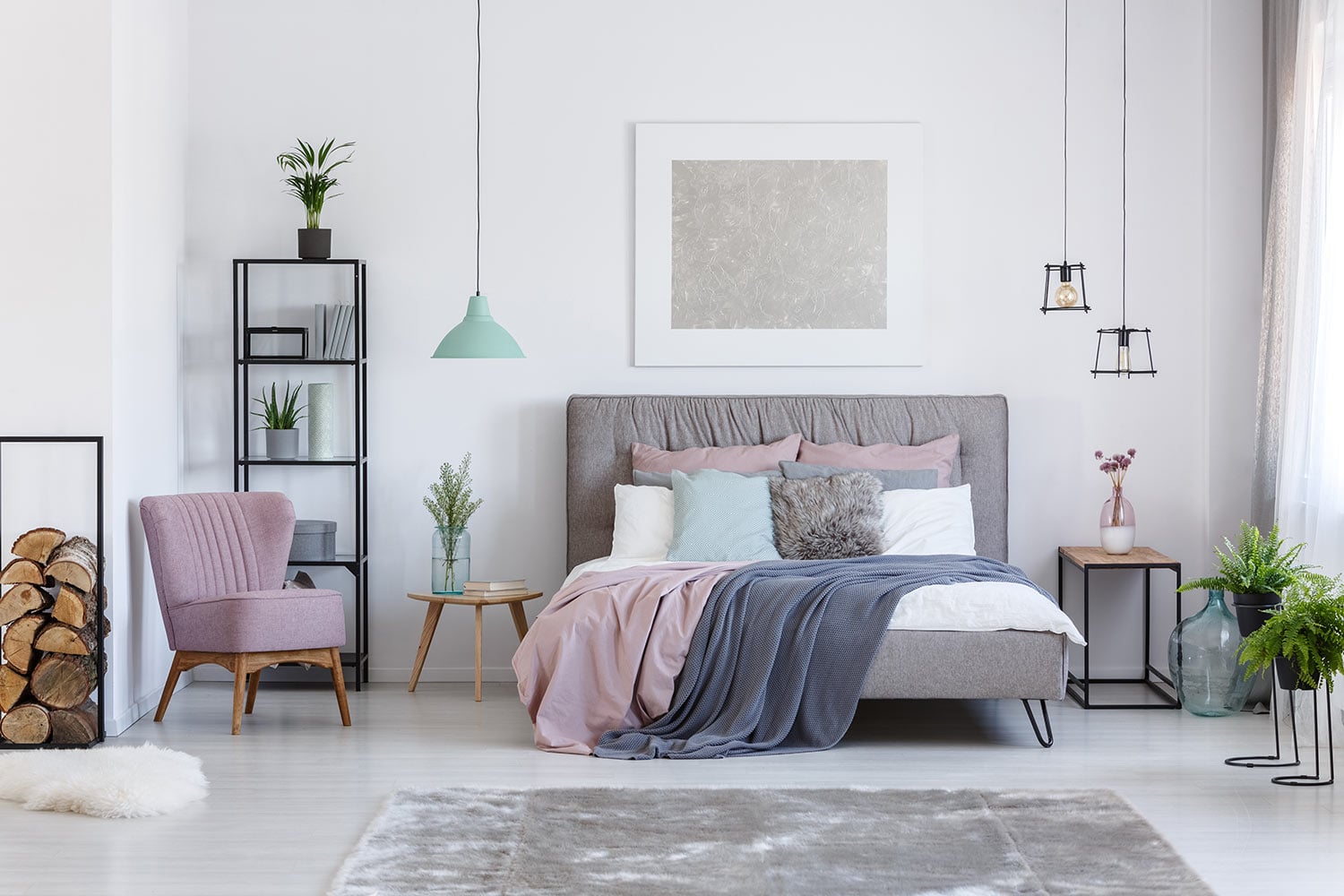
My bedroom used to be the room I ignored.
Every other space in my flat got attention — the living room, the kitchen, even the hallway had a little thing going on. The bedroom was just the place I slept. A bed, a wardrobe that barely closed, a lamp I’d bought seven years ago because it was on sale. Nothing terrible. Nothing worth being in.
Then I had a week off work and decided to actually do something about it. I set myself a strict budget, refused to buy anything full-price, and spent three days rearranging, hacking, and slowly making the room feel like a place I actually wanted to spend time in.
Most of what I ended up with came from IKEA. Here’s what worked, what surprised me, and what I’d do differently.
Start With the Bed — But Not by Buying a New One
The MALM bed frame is everywhere for a reason. It’s low, it’s clean, it doesn’t shout. But what most people don’t use is the storage version — the one with pull-out drawers underneath. In a small bedroom, those two drawers change how the whole room functions. Bulky bedding, out-of-season clothes, extra pillows — all of it disappears under the bed without a storage ottoman in sight.
If you already have a MALM and missed the storage option, there are bed risers that lift the whole frame high enough to add flat under-bed boxes. Not as clean a look, but it works.
The thing that transforms a MALM from looking like a standard IKEA bed to something that feels more considered is what you put around it. A rug that extends past both sides. Bedside tables at the right height. A headboard, even a simple one. The bed itself is just the start.
The Headboard Situation
IKEA sells headboards, but the more interesting IKEA bedroom idea is making one from their other products.
The TYSSEDAL headboard, for example, looks far more expensive than it costs when it’s upholstered in a fabric you’ve chosen rather than the default. Buy the frame, find a remnant fabric you like, and have it reupholstered by a local upholsterer. The whole thing costs less than most mid-range headboards and looks nothing like what came off a factory line.
If that sounds like too much effort, the simplest version: mount a large piece of fabric or wallpaper to the wall behind the bed using clips or adhesive strips. No damage to the wall, completely removable, and it gives the bed a backdrop that makes the whole room feel intentional.
The wall behind the bed is some of the most impactful real estate in a bedroom. Most people leave it blank. That’s almost always the thing the room is missing.
PAX Does More Than Store Clothes
In most bedroom guides, the PAX wardrobe shows up as the obvious choice for storage. It is, and I’m not going to pretend otherwise. But the way most people use it undersells what it can actually do.
The first thing worth knowing is that PAX frames can go floor to ceiling if you add the plinth and cornice pieces. Against a full wall, three PAX frames with cornice across the top look like a fitted wardrobe. Not IKEA-fitted. Actually fitted. The kind that estate agents mention as a selling point.
Mirror doors are the other thing that changes a bedroom meaningfully. Not because they make the room look bigger in a clichéd way, but because a full-length mirror somewhere in the room is genuinely useful, and building it into the wardrobe means you don’t need a freestanding one taking up floor space.
For a detailed breakdown of how to plan a PAX wall properly — measurements, configurations, the plinth and cornice trick — HomeCrafted has done exactly that kind of step-by-step guide, worth reading before you order anything.
Lighting Is the Thing Everyone Gets Wrong
I say this as someone who got it wrong for years: a single overhead light does nothing good for a bedroom. It flattens everything, makes shadows harsh, and turns a potentially cosy room into something that feels like a waiting room.
The IKEA bedroom ideas that made the biggest difference to how my room felt were all lighting-related.
The RANARP clamp lamp on the bedside table replaced my old floor lamp and freed up floor space. The SYMFONISK speaker lamp on the other side gives warm light while also functioning as a Bluetooth speaker — one object doing two jobs, which matters when the room is small. String lights along the headboard wall sound tacky but look genuinely warm when the main light is off.
The rule I follow now: at least three light sources in a bedroom, all at different heights, none of them a bright overhead. The overhead light stays for getting dressed. Everything else uses the lower, warmer lights for evenings.
The Bedside Table Problem
Most bedside tables are either too expensive or too ugly. IKEA solves this in a few ways that aren’t always obvious.
The LACK side table — yes, the £10 one — is the right height for most bed frames and comes in enough finishes to work with almost anything. Stack two of them if you want surface space plus a shelf. Put a small tray on top to contain the inevitable chaos of phone charger, lip balm, book, and glass of water.
The RÅSKOG trolley is another one worth knowing about. It’s a kitchen trolley technically, but next to a bed it holds everything you’d want at arm’s reach without taking up much floor space. Roll it away when you don’t need it.
The Honest Version of All This
None of these IKEA bedroom ideas require a renovation or a significant budget. They require making deliberate choices rather than default ones.
The default bedroom is a bed against a wall, a wardrobe in the corner, and overhead lighting that nobody enjoys. The deliberate bedroom is the same space with better decisions.
IKEA makes those decisions affordable enough that experimenting doesn’t feel risky. That’s the real reason it keeps coming up for rooms like this.
If you’re starting a bedroom project and want to see what other people have done with similar constraints — budget, small space, rented flat — HomeCrafted is a useful place to start before you buy anything.
Start with the wall behind the bed. The rest tends to follow from there.