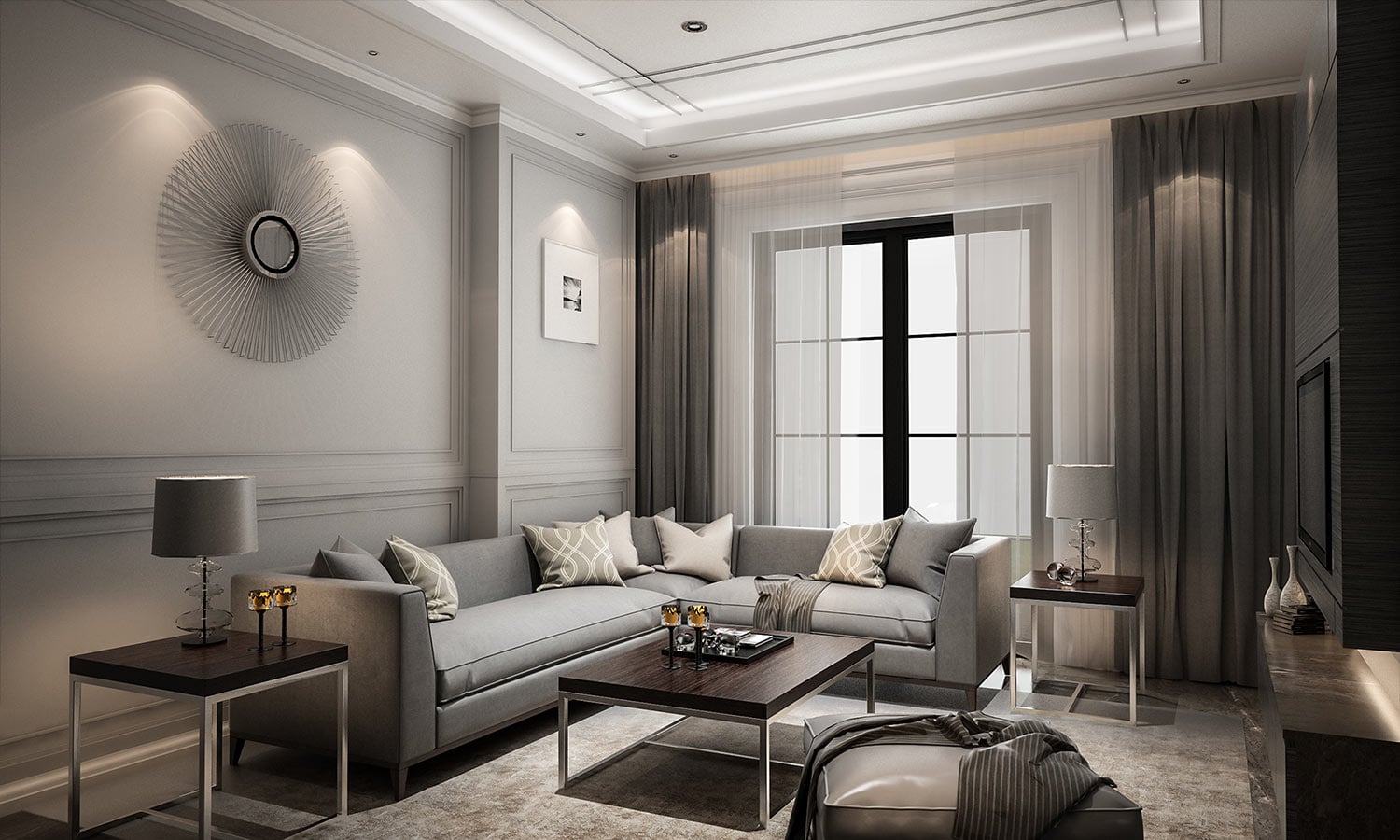
Last year I helped a friend redecorate her living room. She had a Pinterest board, a mood board, a color palette saved on her phone, and three different shopping carts open on her laptop. Two months later the room looked perfectly fine. Clean. Tidy. Completely forgettable.
We sat in it one evening and she said something I haven’t stopped thinking about since. “It looks like a room. It just doesn’t look like my room.”
That gap — between a room that looks good and a room that feels like yours — is exactly what unique home decor is supposed to close. And honestly, most advice out there makes it harder to get there, not easier.
So let me share what I’ve actually learned about creating spaces that feel genuinely personal rather than just well-styled.
Why Everything Looks the Same Right Now
Walk through any home decor store in 2026 and you’ll notice something. The same tones. The same textures. The same shapes on the shelves. Open Instagram and it reinforces the same thing — a visual language so consistent across millions of accounts that individual homes are barely distinguishable from each other.
This isn’t an accident. Algorithms push content that performs well to wider audiences. What performs well is what appeals broadly. What appeals broadly is what’s familiar and comfortable. So the most-seen home decor content is inevitably the most average — and people decorate toward what they’ve seen the most.
The way out of this isn’t finding a different trend to follow. It’s stopping trend-following altogether.
The Only Question That Actually Matters
Before you buy anything, rearrange anything, or paint anything — ask yourself one question honestly.
What do I actually love being surrounded by?
Not what photographs well. Not what your most stylish friend has. Not what the mood board says you should want. What genuinely makes you feel comfortable, at ease, and like yourself when you’re in the room?
For my friend, when we finally asked that question properly, the answer was dark colors, old books, and things with history. None of that was on her original mood board, which had been full of white walls and light wood. Once she started making decisions from that honest place instead of from what she thought a nice living room was supposed to look like, the room changed completely. It started feeling like hers.
That shift — from decorating toward a style to decorating toward yourself — is the foundation of everything genuinely unique in home decor.
Materials Make More Difference Than Style
Here’s something most people don’t realize until they’ve been paying attention to interiors for a while. The material something is made of changes how a space feels more than the style does.
Two side tables can be the same shape and the same price. One is MDF with a printed veneer. One is solid reclaimed oak with decades of grain and texture. Put them in the same room and the experience is completely different — not because of how they look in a photograph but because of how they read in person, how they feel when you touch them, what they communicate about how decisions were made in this space.
Reclaimed and salvaged materials are one of the most reliable routes to genuinely unique home decor because they are, by definition, one of a kind. A reclaimed timber mantle came from a specific building that no longer exists. A set of vintage factory pendant lights were made at a specific moment in manufacturing history. These things carry a weight and character that nothing currently in production can replicate.
Other materials worth considering beyond the obvious: raw unfinished brass that will develop its own patina over time rather than lacquered metal frozen at the moment of manufacture. Natural stone used on walls rather than just floors. Handwoven textiles from independent makers where the slight irregularity of the weave is a feature rather than a flaw.
The sensory experience of a room — how it sounds, how it feels underfoot, how light moves across different surfaces — comes almost entirely from materials. Get the materials right and the style questions become much less important.
Collected Feels Different From Curated
There’s a distinction I keep coming back to when I think about the homes that stay with me versus the ones I forget quickly.
Curated spaces are assembled. Someone made deliberate choices about what belongs together and the room reflects those choices. It’s coherent, considered, and often beautiful. It also frequently feels like nobody actually lives there.
Collected spaces are accumulated. Things arrived from different places at different times for different reasons — some bought, some found, some inherited, some gifted. The room doesn’t have a single voice. It has several, all layered on top of each other. It feels inhabited in a way that curated spaces rarely do.
The object that doesn’t quite match but has been there for twenty years because it belonged to someone you loved. The print you bought on a trip that doesn’t go with anything but you bought it anyway. The lamp that predates your current taste entirely but works in a way you can’t fully explain.
These things are the vocabulary of a collected home. And a collected home is almost always more interesting to be in than a curated one, even when it’s less immediately impressive.
Bold Color Is Braver and Better Than You Think
I want to be direct about color because it’s where I see people make the most consistently regrettable decisions.
Playing it safe with neutrals feels like the sensible choice. It rarely produces the result people were hoping for. What it produces instead is a room that doesn’t offend anyone — including the people who live in it.
The research on this is actually pretty consistent. People who make bold or committed color choices in their homes report higher satisfaction with the result than people who defaulted to safe options, even when the bold choice was initially more anxiety-inducing.
You don’t have to paint every room in a dramatic color. One room taken somewhere genuinely interesting does more for the overall feel of a home than cautious choices throughout. A bathroom in a deep forest green. A bedroom ceiling in a warm terracotta that you’d never put on a wall. A kitchen in a navy so dark it reads almost black in certain light.
The specific color matters less than the commitment to it. A color you love, pushed further than feels entirely comfortable, almost always produces a better result than a color you chose because it was safe.
Mixing Eras Creates Personality
Rooms decorated entirely in one style — entirely mid-century, entirely farmhouse, entirely maximalist Victorian — tend to read as themed rather than personal. Like a show home designed for a specific buyer profile rather than a home that developed around actual people.
Mixing time periods deliberately creates something that can’t be assembled from a single shopping source. A Georgian chest in a modern apartment. Brutalist concrete lamps in a room with antique textiles. A very contemporary painting hung in a very traditional frame.
The mix communicates that real choices were made over real time by people who trusted their instincts rather than following a single rulebook. That’s what gives a space personality rather than just a style.
The practical question is always how far to push it. The thing that holds mixed-era spaces together is usually visual weight — pieces from different periods that share a similar sense of presence and quality tend to coexist well even when they’re stylistically miles apart.
Secondhand Is Where the Best Stuff Actually Lives
I’ve bought a lot of home decor over the years from a lot of different places. The pieces I’m most attached to, the ones that get the most comments, the ones I’d rescue first — almost all of them came from secondhand sources.
Estate sales, antique markets, vintage shops, online resale platforms. The pieces available through these channels are genuinely not available to everyone simultaneously. Finding something good takes effort and patience. That’s exactly why fewer people have it.
The challenge people face with secondhand pieces is making them feel intentional rather than accidental. The answer is almost always in how you display them rather than in the object itself. A secondhand piece given proper space, good light, and a position of importance in a room reads as a considered and interesting choice. The same piece stuffed in a corner reads as clutter.
Confidence in placement does more work than most people realize.
What Unique Home Decor Really Comes Down To
I’ve seen a lot of genuinely memorable homes over the years. The ones I remember aren’t the ones that were most professionally styled or most impressively expensive. They’re the ones that felt unmistakably like the people who lived there.
The collection of objects from a specific obsession displayed without apology. The color that nobody expected but that was clearly exactly right. The mix of things from completely different eras that somehow made complete sense together. The inherited piece that predated everything else in the room and gave it an anchor point nothing bought new could have provided.
None of that can be sourced from a single shopping trip or assembled from a trend board. It comes from knowing yourself well enough to make honest decisions about what belongs in your space, and having the patience to let those decisions accumulate over time into something that couldn’t belong to anyone else.
That’s the only version of unique home decor that actually lasts.