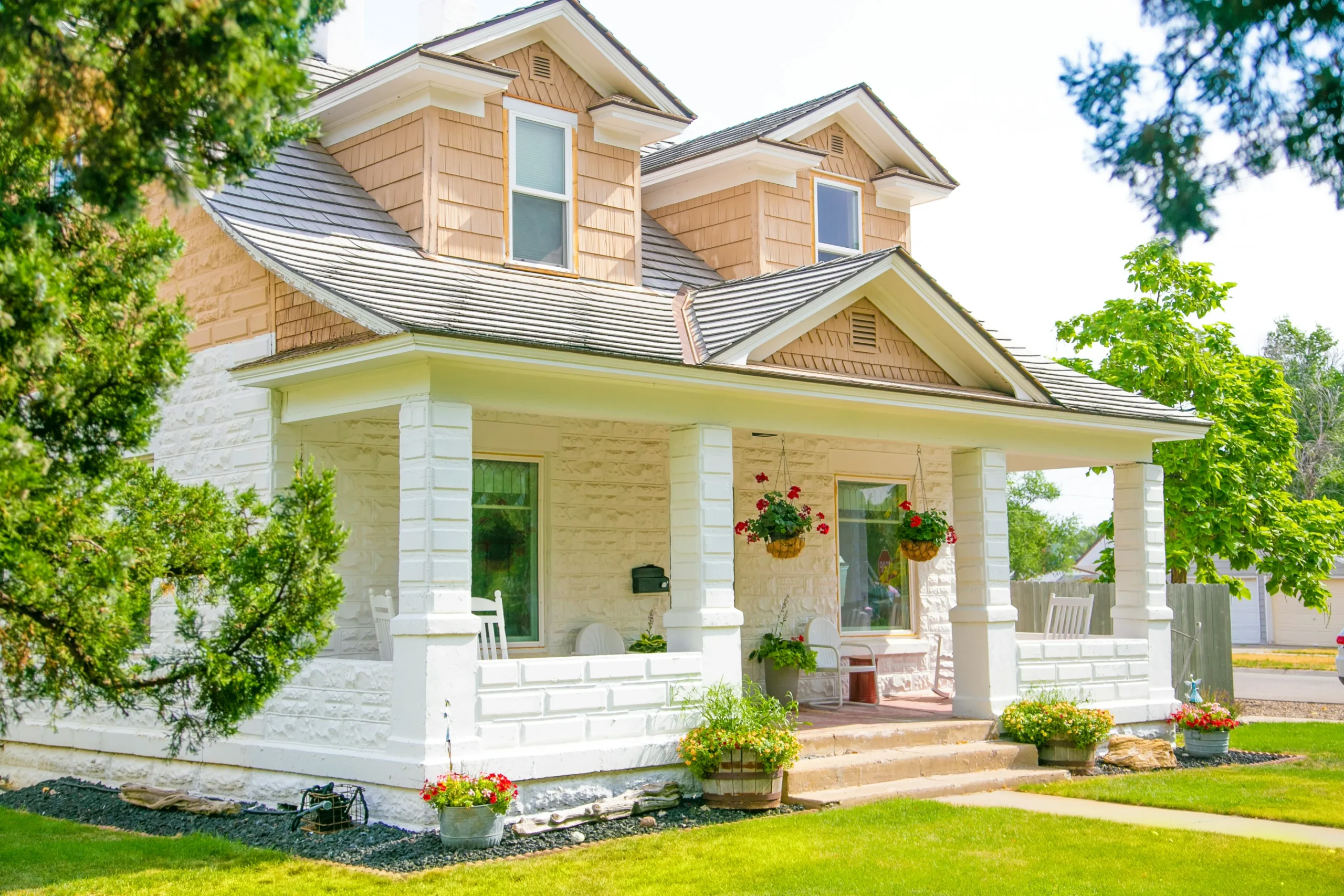
There’s a house on almost every older American street that makes you slow down when you walk past it.
Wide front porch. Thick tapered columns sitting on stone bases. Roof that overhangs generously. Windows grouped in threes, each one divided into smaller panes at the top. Wood trim that looks like someone actually cared about putting it there. The whole thing sits close to the street, low to the ground, and looks like it belongs exactly where it is.
That’s a Craftsman house. And the reason it still makes you slow down — more than a century after the style was invented — is the same reason it was designed in the first place. It was built to be noticed, to be used, and to last.
Where Craftsman Style Came From
The story starts with a reaction.
In the late 1800s, Victorian architecture dominated American homes. Ornate gabling. Elaborate decoration. Church-like rooftops. Details that were applied to surfaces rather than integrated into the structure. It looked expensive because it was trying to look expensive, not because the underlying craftsmanship was particularly good.
The tradition of craftsman-style houses is rooted in the British Arts and Crafts movement, which began in the 19th century. The industrial revolution encouraged people to seek out alternative home designs in response to the widespread Victorian style that featured ornate gabling and church-like rooftops.
The Arts and Crafts movement pushed back. It said that beautiful things should be made by skilled hands from honest materials, and that the making itself should be visible rather than hidden. Applied ornament was out. Structural detail was in.
A 1903 issue of Gustav Stickley’s interior design magazine The Craftsman introduced craftsman-style homes to the United States. Stickley, a famous furniture maker, published his New York home’s floor plans, which served as the prototype of the American craftsman. Stickley’s craftsmanship highlighted the use of natural materials in everything from his custom woodwork cabinetry and built-ins to the exposed rafters of the living room.
Then came the Greenes.
In 1908 in Pasadena, California, architects Henry and Charles Greene developed the Gamble House — built primarily of premium redwood, teak, and maple. The home features structurally exposed timber joinery, broad overhanging eaves, and hand-carved art glass windows depicting the local coast live oak tree.
If you haven’t seen the Gamble House, look it up. It’s the ceiling of what Craftsman architecture can be — every joint visible, every material chosen for its grain and color, every detail serving both a structural and aesthetic purpose simultaneously. It also happens to be in Pasadena, which is why Southern California has more Craftsman homes than anywhere else in the country.
The Exterior Features That Define It
A Craftsman style house is an architectural design known for low-pitched roofs, wide eaves, front porches, natural materials, and handcrafted details. This style emerged in the late 19th and early 20th centuries as a response to the elaborate and ornate house architecture of the Victorian era, emphasizing simplicity, functionality, and visible handcraftsmanship.
Walk up to any Craftsman home and the same elements appear. They’re not decorative choices bolted on afterward — they’re structural decisions that happen to be beautiful.
The Roof
Low-pitched gable or hip roof with wide overhanging eaves. The roofs often feature exposed rafters. Those rafters aren’t hidden under a fascia board like in most contemporary construction — they’re left visible deliberately, because they’re interesting to look at and honest about what they’re doing.
The overhang does real work too. It shades the windows in summer and protects the porch from rain. Function and beauty landing in the same place — that’s the Craftsman principle in physical form.
The Porch
These thoughtfully designed homes feature welcoming front porches supported by tapered columns set on stone or brick piers, creating an instant connection to the neighborhood.
The porch is more than an architectural feature. It’s a social one. Craftsman homes were designed during an era when front porches were where people actually spent time — watching the street, talking to neighbors, being part of a neighborhood rather than retreating from it. The wide, deep Craftsman porch is built for sitting, not just transitioning between door and car.
The columns are specific: tapered, wider at the base than the top, usually set on substantial stone or brick bases rather than sitting directly on the porch deck. The proportions feel grounded and deliberate.
The Windows
Multi-pane windows, often grouped in sets of three, flood the open-concept living spaces with natural light while maintaining architectural symmetry.
Double-hung windows with divided upper sashes — multiple small panes above, a single larger pane below — are the Craftsman signature. They work because they bring in light while keeping the exterior visually interesting. No single large undivided window looks like it belongs on a Craftsman house. The grouped arrangement and the divided panes are what give the facade its rhythm.
The Materials
Natural everything. Wood siding — horizontal lap siding or shingles. Stone or brick for foundations, porch piers, and chimney surrounds. No vinyl. No aluminum cladding. No materials pretending to be something they’re not.
Wood shingle accents add texture and variation to Craftsman facades. Often used in gables or upper sections, they break up siding while keeping the look traditional.
Inside a Craftsman Home
The exterior is where Craftsman homes make their first impression. The interior is where the philosophy becomes most apparent.
Hand-hewn wooden beams, built-in cabinetry, and statement fireplaces with artisan tilework or river rock surrounds exemplify the Craftsman’s dedication to honest materials and fine detailing.
The fireplace is usually the heart of the living room — substantial, faced in river rock or handmade tile, with a wide mantel. Not decorative. Actually used, or at minimum designed as if it will be.
The built-ins are what current homeowners tend to love most. Bookcases flanking the fireplace. Window seats with storage underneath. Built-in buffets in the dining room. Kitchen cabinetry that looks like it was made for the specific kitchen it’s in. Inside these Craftsman-style homes, you’ll discover thoughtfully designed layouts featuring built-in storage solutions, cozy fireplaces with flanking bookcases, and kitchen designs that blend seamlessly with adjacent living areas.
The woodwork throughout — door casings, window trim, wainscoting, plate rails — is substantial. Quarter-sawn oak was the traditional choice, prized for its straight grain pattern and durability. Modern Craftsman homes use a range of species but the principle stays the same: real wood, visible grain, honest finish.
Ceilings are lower than contemporary houses — usually eight or nine feet rather than the ten-foot-plus that became common in 1990s construction. Combined with the dark wood trim and the fireplace, this creates warmth rather than grandeur. Craftsman interiors are built to feel like someone lives in them, not like a showroom.
The Different Types of Craftsman Homes
Not all Craftsman houses look identical. The style has several distinct variations.
There are multiple types of Craftsman homes, including cottage style, clipped gable, and aeroplane craftsman.
The Bungalow is the most recognized. Single story or story-and-a-half, compact footprint, the porch running across most of the front facade. Bungalows specifically refer to single-story or story-and-a-half homes with Craftsman styling. These are the Craftsman houses you see most often in older urban neighborhoods — the kind that went up between 1905 and 1930 on streets that still look remarkably consistent because every house on the block was built in the same style.
Two-Story Craftsman homes keep all the exterior details — tapered columns, wide eaves, multi-pane windows — but add a second floor. The proportions change but the character stays.
Four-Square Craftsman homes have a boxy two-story form with a hip roof, but apply Craftsman detailing to the windows, porch, and trim. Very common in the Midwest, where the style spread enthusiastically from California.
Modern Craftsman is the contemporary interpretation. In 2026, Craftsman styling becomes slightly more contemporary, featuring cleaner lines, larger windows, and lighter exterior finishes while retaining hallmark details like tapered columns, exposed beams, and deep front porches. The bones are the same. The execution is updated for current construction methods and contemporary proportions.
Why Craftsman Homes Hold Their Value
This isn’t a trend piece. Craftsman homes have been consistently popular for over a century, and the reasons are structural rather than fashionable.
The materials are durable. Old-growth Douglas fir, redwood, and oak — the species used in historic Craftsman homes — are denser and more stable than most contemporary construction lumber. A well-maintained Craftsman from 1915 is not just structurally sound. It’s often better built than a house from 1985.
The floor plans work. Open-concept living and dining, connected to the kitchen, with porches that extend living space outward. Craftsman homes figured out livable floor plans before open-concept became a selling point.
The neighborhood context holds. Streets full of Craftsman homes maintain their visual coherence across generations. The style doesn’t clash with itself — two Craftsman houses next to each other look like they belong together in a way that two contemporary houses with different design languages often don’t.
When Annette Yasin and her husband moved to Pasadena from Michigan more than a decade ago, they purchased a condo near Bungalow Heaven — a 16-block area northeast of Old Town known for its substantial collection of Craftsman bungalows. After regular walks in the neighborhood, the couple came across a home and quickly fell in love. That story repeats itself constantly in every city that has Craftsman neighborhoods. People discover them by walking through them, not by seeing them in a magazine.
For inspiration on decorating and styling the interior of a Craftsman home — particularly the built-in details, natural material choices, and warm color palettes that work best with the style — HomeCrafted covers home decor and interior styling guides with practical approaches to making historic architecture feel genuinely lived-in rather than preserved.
Building or Renovating a Craftsman Home in 2026
Modern Craftsman designs seamlessly integrate contemporary amenities — spacious kitchen islands, walk-in pantries, home offices, and mud rooms — while preserving the style’s warm, organic character. Energy-efficient features like superior insulation and sustainable materials honor the Craftsman tradition of quality construction while meeting today’s environmental standards.
The biggest challenge in renovating an existing Craftsman is maintaining the material integrity. Replacing original wood windows with vinyl because it’s cheaper is the most common mistake. The vinyl is easier to maintain but it changes the character of the house in ways that are immediately visible from the street and almost impossible to reverse cleanly.
Original Douglas fir floors — common in historic Craftsman homes — should be refinished rather than replaced wherever possible. The old-growth wood is typically harder and more stable than anything available today, and the patina it develops over decades is genuinely beautiful in a way that new floor staining tries and fails to replicate.
For new builds, Craftsman homes continue to resonate especially as buyers gravitate toward architecture that feels grounded and welcoming. The style’s emphasis on porch living, natural materials, and visible craftsmanship aligns with where residential design is moving in 2026 — away from the cool minimalism of the previous decade and toward warmth, texture, and material honesty.
For broader context on Australian and international home styling approaches that share the Craftsman philosophy of natural materials and considered detail, Adairs covers home textiles and bedroom styling with collections in natural linen and cotton that pair naturally with the warm, tactile interiors Craftsman homes are built around.
Final Thought
Craftsman houses have outlasted every architectural trend that came after them.
Mid-century modern had its moment. Ranch houses dominated the suburbs. Contemporary and industrial styles cycled through. Through all of it, Craftsman homes kept selling, kept being renovated with care, kept making people slow down on the sidewalk.
The reason isn’t nostalgia. It’s that the principles underneath the style — honest materials, visible craftsmanship, porches that connect you to a neighborhood, interiors built for actual life — are principles that don’t go out of fashion.
They didn’t go out of fashion because they were never fashionable in the first place. They were just right.