Something shifted in Australian homes this year.
Walk through the newer interiors on any design account and you’ll notice it immediately. The crisp white walls are gone. The minimalist Scandi aesthetic that dominated for a decade has quietly packed its bags. What replaced it is warmer, louder, and — honestly — a lot more interesting.
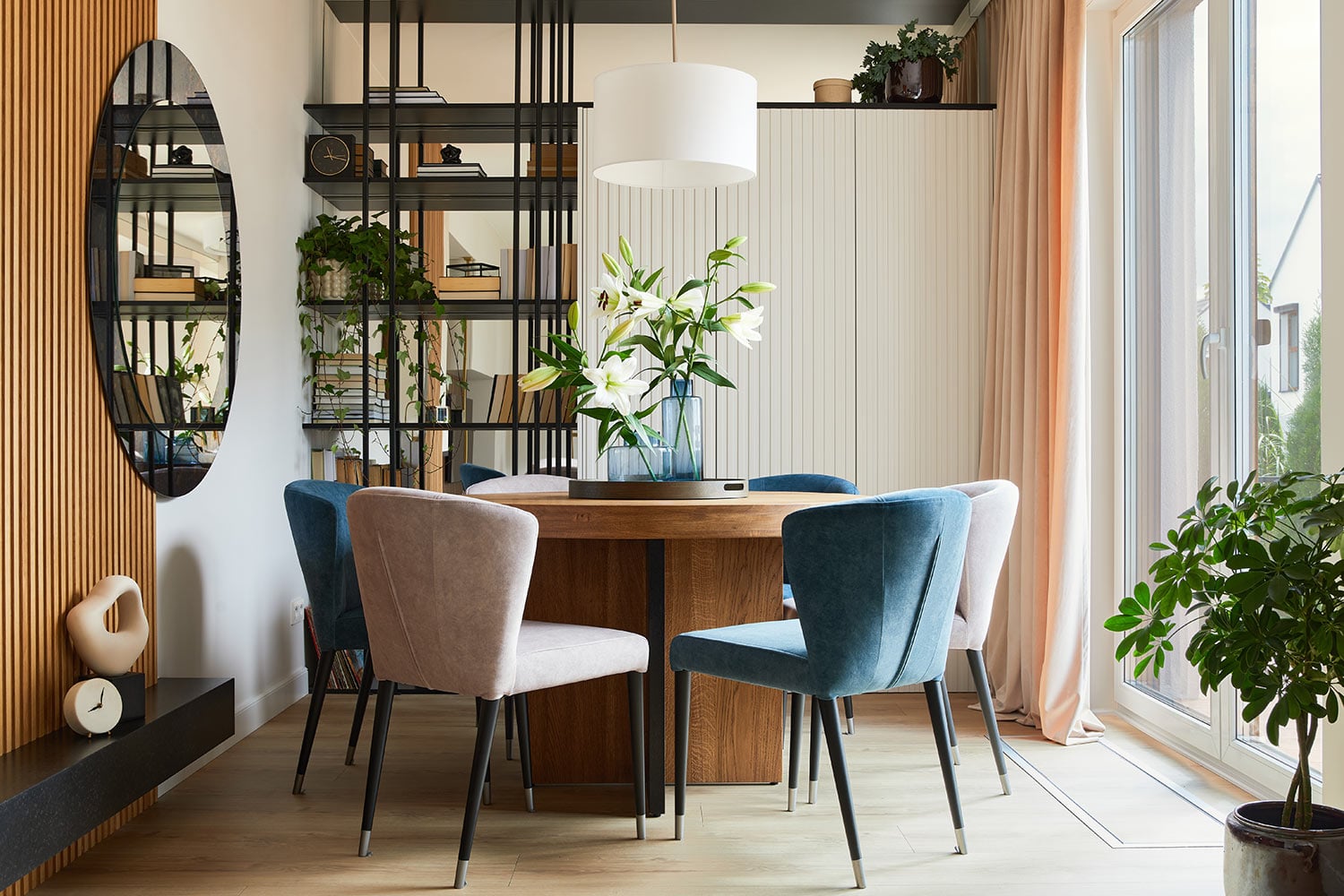
Interior design in 2026 is trending toward warm, personalized, expressive spaces with layered patterns, textured materials like velvets and natural fibres, muted and earthy colours, moodier darker woods, and curated high-low mixing.
That’s a significant pivot. And if your home still looks like it was styled circa 2019 — white everything, one statement plant, a single arch mirror — this guide is going to be useful.
Here’s what’s actually trending in home decor in 2026, what the data behind the trends looks like, and which of these directions are worth investing in versus which will look dated in eighteen months.
Why This Year’s Trends Are Different
Most trend forecasts are aspirational. They show you stunning editorial photography of spaces that real humans could never actually live in comfortably, then call it a “trend.”
2026’s home decor shift is different because it’s being driven by genuine behavioural change rather than editorial direction.
The 2026 design trend toward authenticity and personalization is aligned with a younger generation that’s yearning for realness — a backlash to mass production in both fashion and home decor, with people seeking pieces with personality and a story.
Pinterest reports that trends are evolving more than four times faster than they did seven years ago, meaning consumers are fighting trend fatigue. To combat this, people are expected to prioritize self-expression, comfort, and identity curation in their living spaces.
In practical terms: the homes that look most current in 2026 are the ones that look most like the people who live in them. That’s a fundamentally different brief than “add a statement piece from this season’s collection.”
The Trends Worth Knowing About
Warm Earthy Interiors — The Reliable Foundation
This is the direction with the most staying power and the lowest risk for anyone updating their home.
Layered patterns, textured materials like velvets and natural fibres, muted and earthy colours, and moodier darker woods are at the heart of 2026’s interior design shift. Terracotta, warm sage, dusty rose, deep chocolate browns, aged brass — these are the palette of the moment and unlike the sharp white-and-grey of the previous decade, they photograph beautifully in real life rather than just under studio lighting.
The practical approach here is layering rather than replacing. You don’t need to gut your living room to get this look. Add a textured throw in a warm earth tone. Swap out cool-toned cushions for something in ochre or rust. Replace a stark white lamp shade with linen or rattan. The foundation shifts without a renovation budget.
Afrohemian Decor — The Biggest Cultural Moment
Pinterest clocked a 220% surge in searches for “afrobohemian home decor,” plus a 130% jump for adire fabric and 210% for Berber motifs. The style incorporates Nigerian adire cloth draped over furniture or hung as wall art, handwoven baskets from Ethiopia, Berber-patterned rugs, and rattan chairs.
This is one of the most significant aesthetic shifts in home decor in years. Afrohemian — the fusion of African and bohemian influences — brings in rich indigo-dyed textiles, geometric patterns, and natural materials in a way that’s visually striking and deeply rooted in craft tradition rather than mass production.
Searches for rattan and bamboo beaded curtains are up 50-60% year over year as hallmarks of this fusion style.
For Australian homes, this direction translates naturally. The natural materials, the warmth of the colour palette, and the emphasis on handcrafted pieces align well with how many Australian interiors already approach texture and material. Start with one statement textile — a throw, a cushion cover, a wall hanging — and build from there.
Neo Deco — Art Deco Comes Back Smarter
Art Deco dragged itself out of the 1920s and into 2026, chrome intact. Neo Deco resurrects geometric obsessions — chevrons, sunburst mirrors, fan-shaped arches — but swaps the period stuffiness for something sleeker and more lived-in. Pinterest saw searches climb 80% for “red marble bathroom,” 100% for “antique bar cart,” and 40% for “pendant lamp.”
The key distinction from full Art Deco revival is restraint. Neo Deco is one or two statement pieces — a sunburst mirror, a brass bar cart, a geometric pendant light — placed in an otherwise contemporary space. It’s not committing to an entire period aesthetic. It’s borrowing the most interesting parts and leaving the stuffiness behind.
This direction works particularly well in bedrooms and dining rooms. A geometric headboard or a brass bedside lamp reads immediately as Neo Deco without requiring any further commitment.
Extra Celestial — The Unexpected One
Extra Celestial swaps cutesy space-core for a sharper style, leaning into holographic finishes, opalescent surfaces, and sleek almost aerodynamic silhouettes that feel futuristic. Pinterest reports an 80% spike in searches for “alien core aesthetic,” 115% for “opalescent,” and 140% for “alien inspired” elements.
This is the trend with the highest risk-reward ratio in 2026.
Done well — a single iridescent vase, a holographic cushion, an opalescent glass pendant light — it’s genuinely striking and unlike anything that’s appeared in mainstream home decor in years. Done poorly or overdone, it looks like a film set for a 2001: A Space Odyssey remake.
The rule: one piece per room, maximum. Let it be the conversation starter it’s meant to be without tipping into costume territory.
Colour Drenching — Committing All the Way
2026 sees the 60-30-10 colour rule expanding to 70-80%, with colour drenching moving beyond walls to furniture, textiles, and decor — committing one dominant colour across an entire room rather than using it as an accent.
This is a big ask for most people. Painting your walls deep forest green is one thing. Painting your walls, furniture, and skirting boards all the same deep forest green is another.
But the spaces where it’s done well look extraordinary. A bedroom in one continuous warm terracotta — walls, bedhead, linen, cushions — creates a cocoon-like intimacy that no amount of carefully placed accent colours achieves. The commitment is the point.
Start small. A bathroom is the lowest-risk room to try full colour drenching. Limited square footage, contained visual impact, maximum drama.
What’s Actually Worth Investing In
The difference between a trend that enriches your home and a trend that ages badly usually comes down to whether it’s based on quality materials and personal meaning or whether it’s purely visual novelty.
Andrea Pierre, founder and principal designer of Toronto-based firm &Pierre, recommends interpreting trends rather than copying them exactly — and emphasises sourcing from local suppliers and local makers where possible, since people are seeking pieces with personality and a story.
For Australian homes in 2026, the investments most likely to pay off are:
Natural material textiles — linen, cotton, rattan, bamboo — that work across multiple trend cycles rather than locking you into one aesthetic. Quality bed linen in earthy tones. A genuinely interesting handcrafted piece that you actually love rather than something that just photographs well. One statement lighting fixture that does the heavy lifting in a room without requiring everything else to change around it.
What’s less worth investing in: trend-specific statement furniture in very specific finishes. That deep jewel-toned velvet sofa that looks perfect for 2026 may feel very specific by 2028. Neutral base furniture with changeable textiles gives you more flexibility.
For quality bed linen and home textiles that anchor these 2026 trends beautifully — particularly in the earthy warm palette that’s dominating Australian bedrooms right now — Adairs covers the full spectrum of bed linen and bedroom styling with collections that hit the current trends at accessible price points.
The Australian Context
It’s worth noting that home decor trends don’t land identically everywhere. The Australian market has its own rhythm.
The warm earthy palette translates almost perfectly into Australian homes — it aligns with the light quality, the outdoor-indoor living style, and the natural material preference that’s always been present in well-designed Australian interiors. Adairs’ Vintage Wash Linen in terracotta or sage sits exactly in this direction and it’s been their strongest-selling range this year for a reason.
The Afrohemian direction is gaining significant traction in Australian design accounts, particularly in Sydney and Melbourne where eclectic, globally-influenced aesthetics have always found an audience.
Neo Deco is appearing most strongly in apartment interiors where one statement piece does the work that a renovation budget can’t.
For broader digital lifestyle content, home inspiration, and creative approaches to styling any space — including budget-friendly ways to apply 2026’s biggest trends — KreativeByte covers creative digital lifestyle topics with a practical focus that resonates with anyone building a considered home without unlimited resources.
One Honest Note
Not every trend belongs in every home.
The spaces that look most considered in 2026 are the ones where the people who live in them made deliberate choices about what resonated with them personally — not the ones that systematically ticked every trend box from a year-end forecast.
Use this guide to identify what genuinely appeals to you. Try one direction at a time. Give it long enough to live with before deciding whether it works.
The best-designed homes have always looked like the people who live in them. That was true in 2016 and it’s true now. The difference in 2026 is that the design world is finally saying it out loud.